Control of the property
Ownership, leasing, management, maintenance contracts, vendors, and who controlled the area can determine where relevant records and responsibility lie.
Tampa Premises Liability Lawyer
D2 Law investigates dangerous conditions, maintenance, inspection, notice, surveillance, incident history, security issues when applicable, causation, and the injuries connected to the event.
Understanding the claim
Premises liability can include falls, unsafe walkways, structural hazards, inadequate maintenance, and other dangerous-property conditions. Each theory requires evidence tying the property’s conduct to the injury.
Premises liability is broader than a traditional slip and fall. A claim may involve a damaged walkway, unsafe stairs, falling merchandise, poor maintenance, a structural condition, inadequate lighting, or another hazard connected to the property. The first task is identifying exactly what created the risk and which person or company controlled that part of the premises.
Commercial properties can involve owners, tenants, property managers, maintenance vendors, security contractors, and other businesses with different responsibilities. Leases, contracts, inspection routines, work orders, incident reports, surveillance, and prior complaints may help show who had the ability and duty to address the condition.
The case also has to connect the condition to the injury. Photographs, measurements when appropriate, witness accounts, medical records, and a clear timeline can help show both how the event occurred and why the resulting injuries are consistent with it.
What D2 looks at
These are some of the major areas D2 Law evaluates when deciding how the incident happened, who may be responsible, and how the injuries have affected the client.
Ownership, leasing, management, maintenance contracts, vendors, and who controlled the area can determine where relevant records and responsibility lie.
Inspection practices, complaints, work orders, prior incidents, surveillance, and employee knowledge may help establish what was known or should have been discovered.
The condition must be connected to the event, and the claimed injuries and losses must be supported by reliable evidence.
After the incident
These are general information, not a substitute for advice about a particular case.
Damages and recovery
Depending on the facts and applicable law, an injury claim may involve medical expenses, lost income, diminished earning capacity, future care, pain and suffering, and other legally recoverable losses. The available insurance and responsible parties can also affect the practical path to recovery.
D2 Law’s job is to connect the evidence: what happened, who was responsible, what injuries were caused, what those injuries changed, and what sources of recovery may be available.
Explore the Tampa personal injury hub →Tampa Bay counsel
D2 Law serves injured clients from offices across Tampa Bay and Brooksville. The firm can evaluate the incident, evidence, insurance, injuries, and practical next steps.
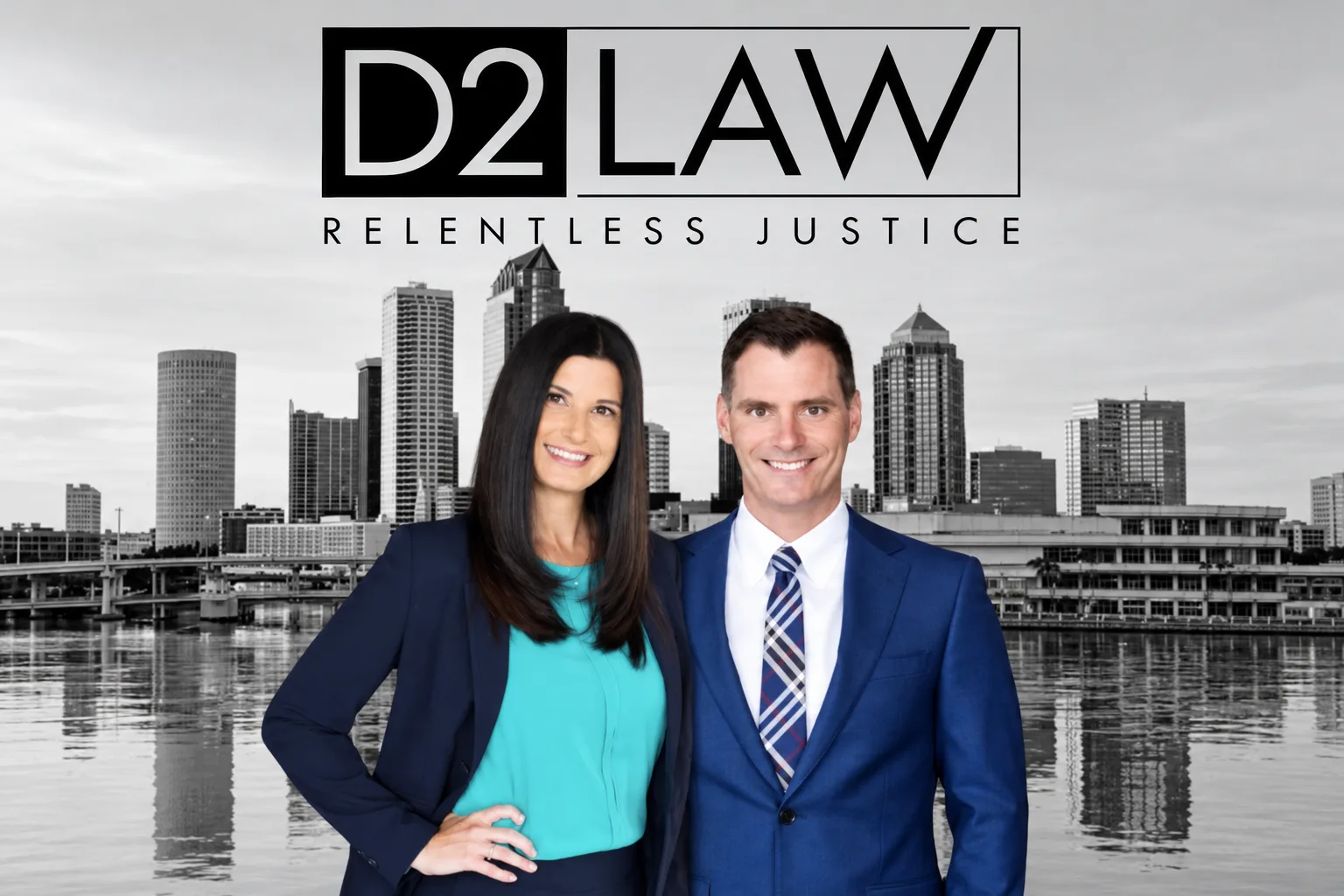
Christian & Nicole Denmon
Christian Denmon and Nicole Denmon are Florida attorneys and have been members of The Florida Bar since 2007. A first conversation should help you understand the important facts, evidence to preserve, and whether D2 Law may be able to help.
Questions people ask
Slip-and-fall is one type of premises claim. Premises liability can cover a broader range of allegedly unsafe property conditions.
Responsibility can depend on ownership, possession, contracts, maintenance duties, and control of the specific area.
In many property cases, whether the responsible party knew or should have known of the dangerous condition is a central issue.
No. Representation begins only after the firm confirms it can accept the matter and the required agreement is completed.
Related D2 Law resources
Talk with D2 Law
Start with the incident, your injuries, and the questions you need answered.