Roadway and visibility
Crosswalks, signals, lighting, obstructions, speed, turning movements, and sight lines can help explain what the driver and pedestrian could see.
Tampa Pedestrian Accident Lawyer
D2 Law investigates the driver’s movement, visibility, traffic controls, crosswalk and roadway conditions, witnesses, nearby cameras, vehicle evidence, and the medical consequences of a pedestrian collision.
Understanding the claim
Pedestrian cases can turn on details that disappear quickly: signal timing, lighting, sight lines, nearby surveillance, vehicle position, road markings, witness memory, and the condition of the scene.
A pedestrian collision can happen at an intersection, in a crosswalk, in a parking area, or on a roadway where visibility changes from one direction to another. Signal timing, turning movements, vehicle speed, lighting, parked cars, landscaping, road design, and the exact point of impact can all affect how the event is understood.
That evidence can disappear quickly. Businesses and homes may overwrite surveillance video, vehicles are repaired, road conditions change, and witnesses become harder to locate. Photographs, 911 records, traffic-camera or private video when available, witness accounts, and vehicle evidence can help preserve a reliable picture of what happened.
The injury side of the case often deserves equal attention. A pedestrian has no vehicle structure absorbing the impact, so orthopedic, head, spinal, internal, or soft-tissue injuries may affect work and daily independence for months or longer. The claim should document the course of recovery, not simply the emergency-room diagnosis.
What D2 looks at
These are some of the major areas D2 Law evaluates when deciding how the incident happened, who may be responsible, and how the injuries have affected the client.
Crosswalks, signals, lighting, obstructions, speed, turning movements, and sight lines can help explain what the driver and pedestrian could see.
Nearby business or residential video, witnesses, 911 records, photographs, reports, and vehicle evidence may corroborate what happened.
Pedestrians can sustain orthopedic, head, spinal, internal, and other significant injuries. Treatment, recovery, work loss, and functional changes should be documented accurately.
After the incident
These are general information, not a substitute for advice about a particular case.
Damages and recovery
Depending on the facts and applicable law, an injury claim may involve medical expenses, lost income, diminished earning capacity, future care, pain and suffering, and other legally recoverable losses. The available insurance and responsible parties can also affect the practical path to recovery.
D2 Law’s job is to connect the evidence: what happened, who was responsible, what injuries were caused, what those injuries changed, and what sources of recovery may be available.
Explore the Tampa personal injury hub →Tampa Bay counsel
D2 Law serves injured clients from offices across Tampa Bay and Brooksville. The firm can evaluate the incident, evidence, insurance, injuries, and practical next steps.
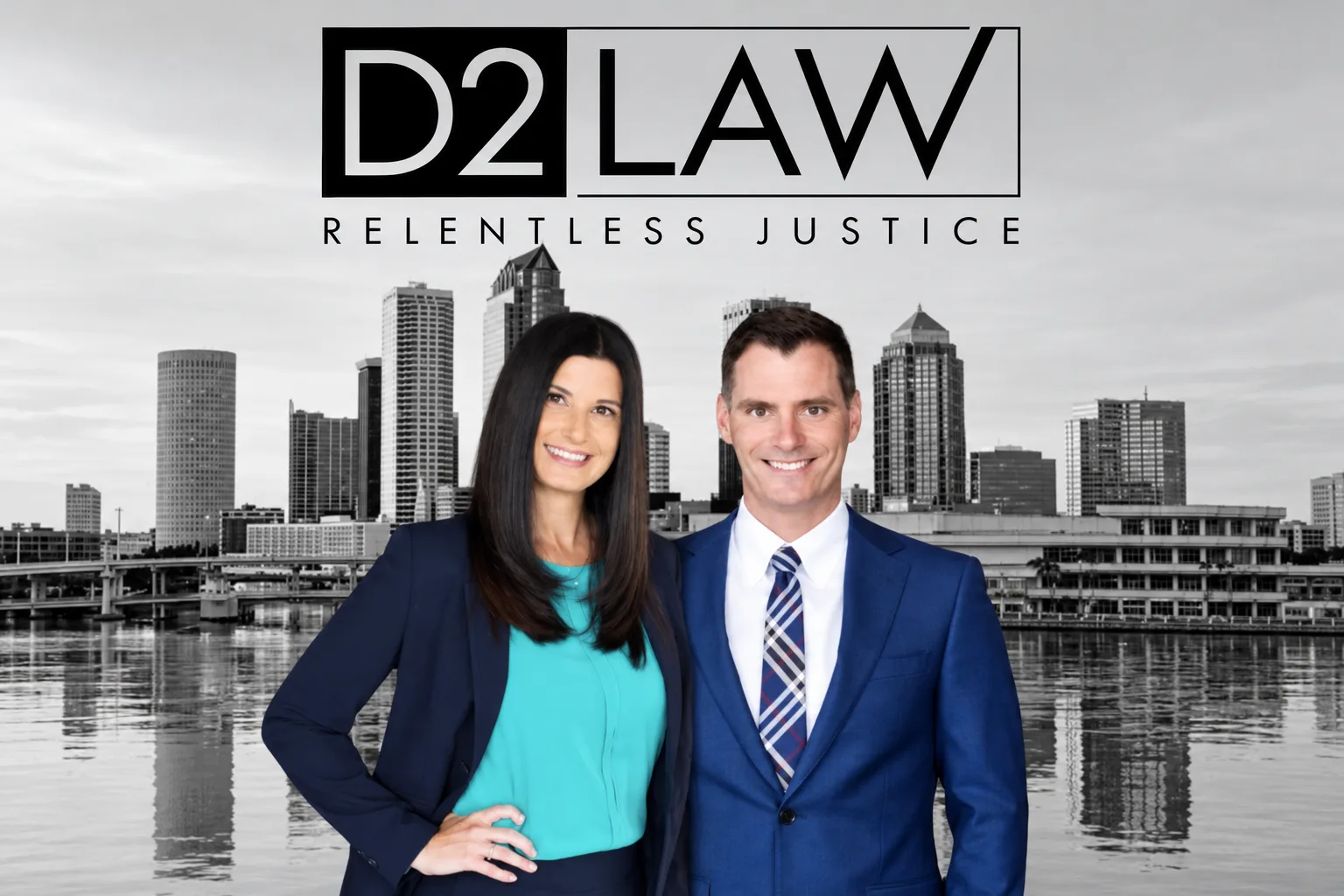
Christian & Nicole Denmon
Christian Denmon and Nicole Denmon are Florida attorneys and have been members of The Florida Bar since 2007. A first conversation should help you understand the important facts, evidence to preserve, and whether D2 Law may be able to help.
Questions people ask
Not necessarily. Fault depends on the complete circumstances and applicable law. Driver conduct, visibility, roadway design, pedestrian conduct, and comparative fault may all be relevant.
Video can objectively show traffic movement, visibility, timing, or the collision itself, but recordings may be overwritten if they are not identified and preserved.
Depending on the case, recoverable losses may include medical expenses, lost income, future losses, pain and suffering, and other legally recognized damages.
No. Representation begins only after the firm confirms it can accept the matter and the required agreement is completed.
Related D2 Law resources
Talk with D2 Law
Start with the incident, your injuries, and the questions you need answered.