Mechanism and timing
How the body moved, where impact occurred, when symptoms appeared, and how they developed can be relevant alongside medical evidence.
Tampa Neck Injury Lawyer
D2 Law evaluates the mechanics of the incident, timing of symptoms, medical findings, treatment, prior history, work impact, and evidence of how a neck injury affects ordinary life.
Understanding the claim
A neck-injury claim may involve strains, disc injuries, nerve symptoms, fractures, or other conditions. The legal question is not simply whether an MRI shows something—it is whether reliable evidence connects the injury and its consequences to the event.
Neck pain after a collision can come from different structures and can range from a temporary strain to disc, nerve, fracture, or other significant injury. Imaging may be important, but a scan alone does not explain when symptoms began, what treatment was required, whether the condition was caused or aggravated by the event, or how the injury affects daily life.
Insurers frequently examine prior neck complaints, degenerative findings, gaps in care, and changes in treatment. That makes chronology important. Records should show what the person could do before the incident, what changed afterward, how symptoms progressed, and whether the treatment and medical opinions support that history.
Work demands are often part of the story. A neck injury can affect lifting, driving, computer work, sleep, overhead activity, and the ability to remain in one position for long periods. Documenting those practical limitations can be just as important as documenting the diagnosis itself.
What D2 looks at
These are some of the major areas D2 Law evaluates when deciding how the incident happened, who may be responsible, and how the injuries have affected the client.
How the body moved, where impact occurred, when symptoms appeared, and how they developed can be relevant alongside medical evidence.
Records of examinations, imaging, therapy, specialist referrals, injections, surgery when applicable, and restrictions help document the course of care.
Missed work, modified duties, sleep disruption, driving limits, lifting restrictions, and loss of ordinary activities can help show real-world impact.
After the incident
These are general information, not a substitute for advice about a particular case.
Damages and recovery
Depending on the facts and applicable law, an injury claim may involve medical expenses, lost income, diminished earning capacity, future care, pain and suffering, and other legally recoverable losses. The available insurance and responsible parties can also affect the practical path to recovery.
D2 Law’s job is to connect the evidence: what happened, who was responsible, what injuries were caused, what those injuries changed, and what sources of recovery may be available.
Explore the Tampa personal injury hub →Tampa Bay counsel
D2 Law serves injured clients from offices across Tampa Bay and Brooksville. The firm can evaluate the incident, evidence, insurance, injuries, and practical next steps.
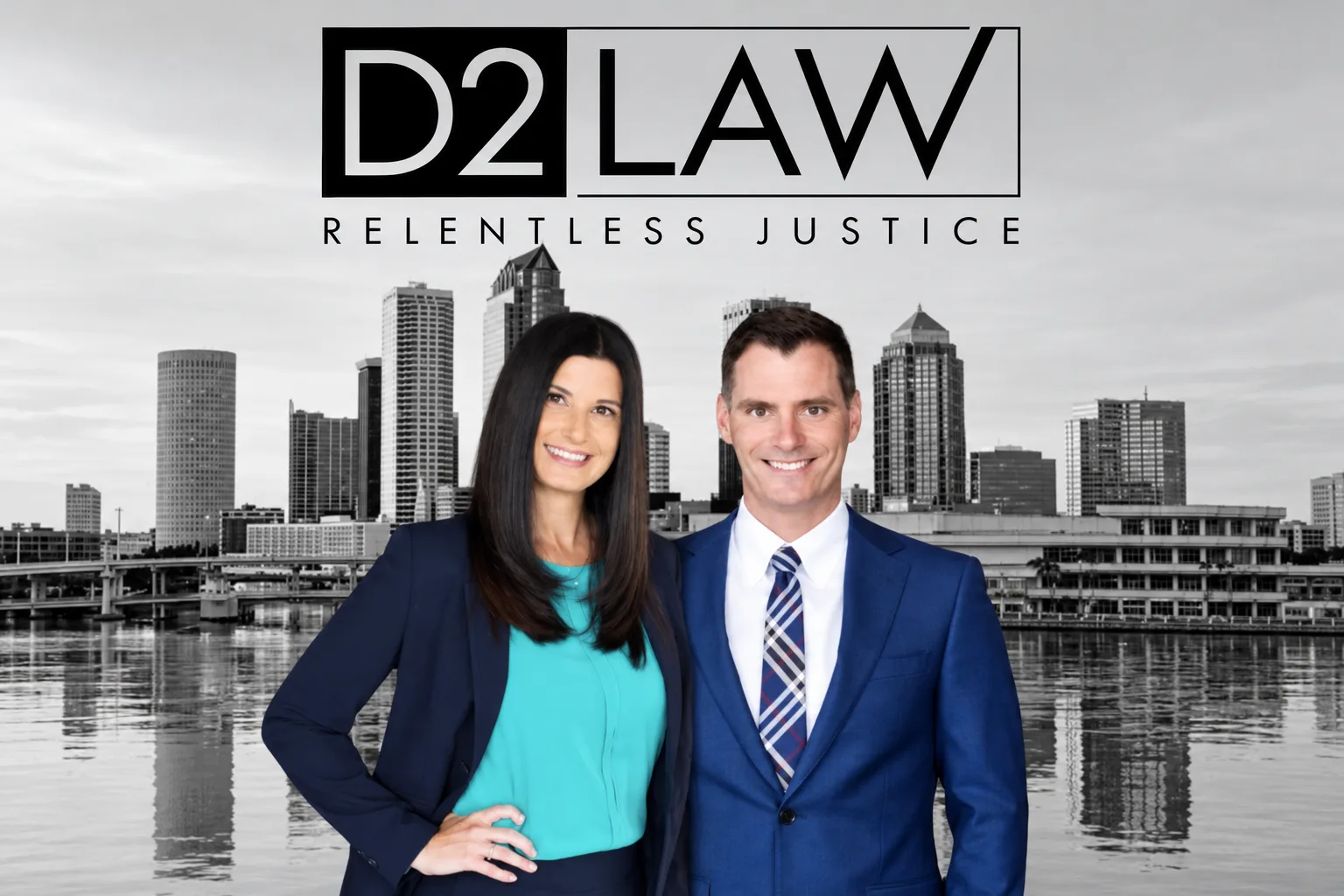
Christian & Nicole Denmon
Christian Denmon and Nicole Denmon are Florida attorneys and have been members of The Florida Bar since 2007. A first conversation should help you understand the important facts, evidence to preserve, and whether D2 Law may be able to help.
Questions people ask
A prior condition does not automatically answer whether a new incident caused a new injury or aggravated an existing one. Medical history and comparison evidence matter.
No single test decides a legal claim. Imaging may be important, but symptoms, examinations, treatment, causation, prior history, and function can also matter.
When supported by the facts and law, lost income and diminished earning capacity can be relevant damages.
No. Representation begins only after the firm confirms it can accept the matter and the required agreement is completed.
Related D2 Law resources
Talk with D2 Law
Start with the incident, your injuries, and the questions you need answered.