The companies behind the truck
The driver may be only one part of the case. Ownership, employment, contracting, maintenance, dispatch, and cargo relationships can identify other responsible parties and records.
Tampa Truck Accident Lawyer
Commercial-truck cases can involve a driver, carrier, vehicle owner, broker, maintenance company, cargo interests, multiple insurers, and evidence that may exist only in company systems. D2 Law focuses on identifying that evidence early.
Understanding the claim
A tractor-trailer collision can raise separate questions about driver conduct, company safety practices, hours of service, inspection and maintenance, loading, vehicle data, insurance, and who controlled the work being performed.
When a passenger vehicle collides with a commercial truck, the investigation often reaches beyond the driver at the wheel. The carrier may have records concerning hiring, training, dispatch, hours, inspections, repairs, and the trip itself. Other companies may own the tractor or trailer, maintain the equipment, arrange the shipment, or control part of the work. The goal is to determine who actually controlled the relevant conduct and what each party did before the crash.
Some of the most useful evidence may never appear in the police report. Electronic logging and vehicle data, dash-camera footage, dispatch communications, inspection and maintenance records, post-crash records, photographs, and third-party video can exist in different places and may not be kept forever. A serious truck case should identify potentially important sources early and compare them with the physical evidence and witness accounts.
The liability investigation also has to connect to the person who was hurt. Truck collisions can lead to hospitalization, surgery, rehabilitation, time away from work, or lasting restrictions, but the claim still has to prove those losses. Medical records, wage information, future-care evidence when appropriate, and a clear account of daily limitations are what turn a severe collision into a supported damages claim.
What D2 looks at
These are some of the major areas D2 Law evaluates when deciding how the incident happened, who may be responsible, and how the injuries have affected the client.
The driver may be only one part of the case. Ownership, employment, contracting, maintenance, dispatch, and cargo relationships can identify other responsible parties and records.
Driver qualification material, logs, dispatch information, inspection and maintenance records, onboard data, photographs, video, and post-crash records may help explain what happened.
Truck crashes can produce significant injuries and time away from work. Medical evidence, wage records, future-care information, and day-to-day limitations help show the actual impact.
D2 Law case result
D2 Law has published a $1 million auto-vs.-truck result, along with a separate $750,000 auto-vs.-truck result. Past results do not guarantee or predict a future outcome.
See D2 Law case results and client stories →The facts and circumstances of every case are different. Past results do not guarantee, predict, or promise a similar outcome.
After the incident
These are general information, not a substitute for advice about a particular case.
Damages and recovery
Depending on the facts and applicable law, an injury claim may involve medical expenses, lost income, diminished earning capacity, future care, pain and suffering, and other legally recoverable losses. The available insurance and responsible parties can also affect the practical path to recovery.
D2 Law’s job is to connect the evidence: what happened, who was responsible, what injuries were caused, what those injuries changed, and what sources of recovery may be available.
Explore the Tampa personal injury hub →Tampa Bay counsel
D2 Law serves injured clients from offices across Tampa Bay and Brooksville. The firm can evaluate the incident, evidence, insurance, injuries, and practical next steps.
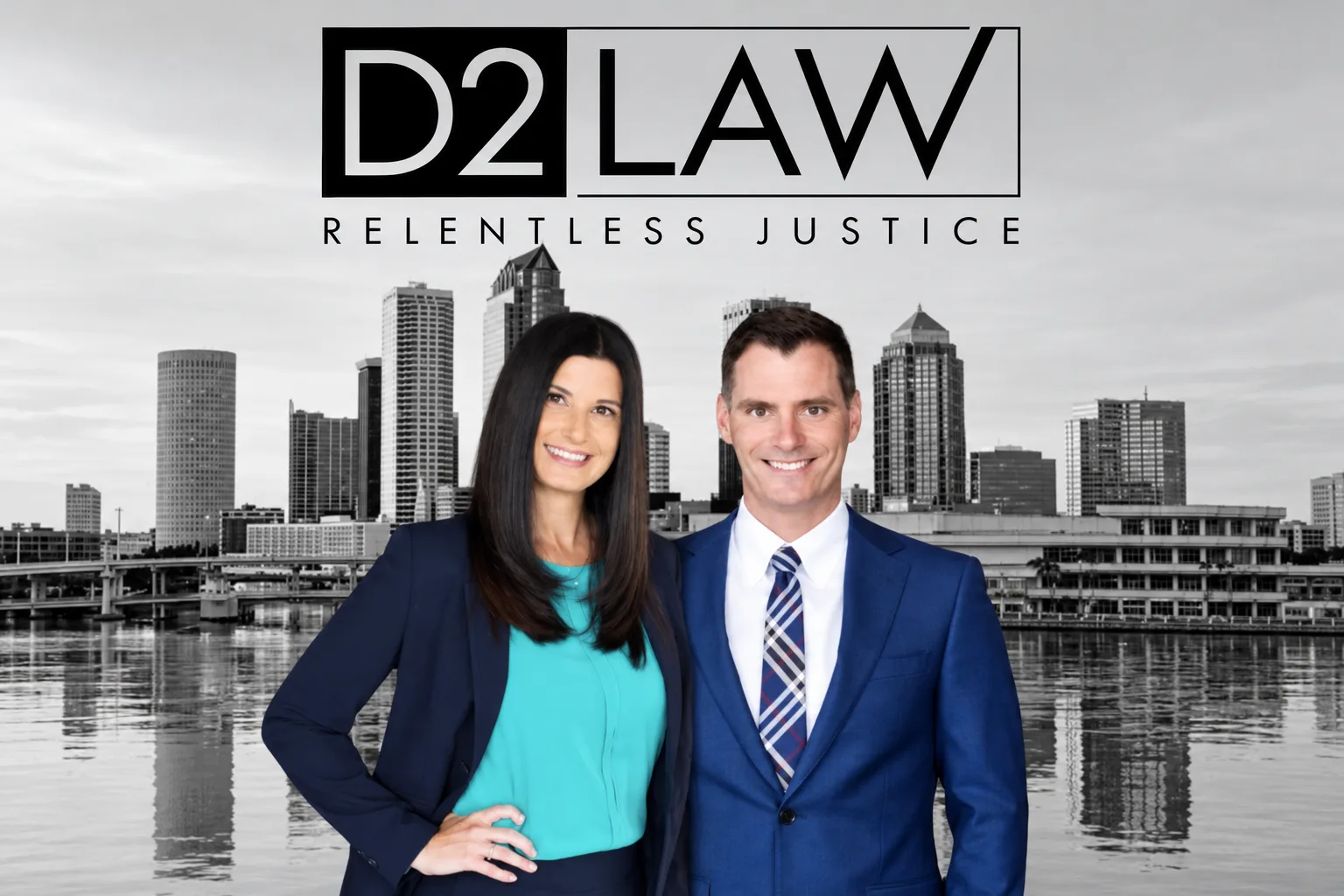
Christian & Nicole Denmon
Christian Denmon and Nicole Denmon are Florida attorneys and have been members of The Florida Bar since 2007. A first conversation should help you understand the important facts, evidence to preserve, and whether D2 Law may be able to help.
Questions people ask
Depending on the facts, responsibility may involve the driver, carrier, owner, employer, maintenance provider, loading company, manufacturer, or another business. The relationships have to be investigated rather than assumed.
Commercial cases may involve driver and carrier records, electronic data, inspections, maintenance, dispatch information, company policies, and other material that does not exist in an ordinary two-car collision.
Florida’s current general limitations period for an action founded on negligence is two years, but the correct deadline can depend on the incident date, defendant, claim type, and exceptions. A specific case should be reviewed promptly rather than relying on a general website deadline.
No. Representation begins only after the firm confirms it can accept the matter and the required agreement is completed.
Related D2 Law resources
Talk with D2 Law
Start with the incident, your injuries, and the questions you need answered.